Stop Guessing: Best Lighting for Low Ceilings (Flush Mount vs Recessed)
As we discussed earlier, low ceilings can be tricky to design around.
They can make rooms feel tighter, more compressed, and less open than they actually are, which means every design choice needs to be more intentional. Even small mistakes in lighting placement or fixture selection can visually shrink the space instead of enhancing it.
They also limit your fixture options and force you to think more carefully about lighting design. What works beautifully in a high-ceiling home—like large chandeliers, dramatic pendant lights, or layered hanging fixtures—can easily feel overwhelming, awkward, or even obstructive in a room with limited vertical height. Instead of elevating the space, the wrong choice can make the ceiling feel even lower and the room more confined.
So, when you’re dealing with low ceilings (typically 8 feet or lower), the decision often comes down to choosing lighting that enhances brightness and openness without taking up too much visual or physical space.
Flush Mount vs Recessed Lighting — Which One Actually Looks Better?
At first glance, both seem like safe options. They don’t hang down, they save space, and they’re commonly used in modern homes. But visually and functionally, they create very different results.
This guide breaks down everything you need to know—so you can choose the right lighting for your space, not just what looks good in a showroom.
First: What Counts as “Low Ceiling”?
Before comparing lighting options, it’s important to clearly define what we mean by a “low ceiling”—because this directly affects what will (and won’t) work in your space.
A low ceiling is generally:
- 7 to 8 feet high – This is very common in older homes, condos, and apartments, where vertical space is more limited. In these settings, even slightly bulky fixtures can feel overwhelming or make the room appear more cramped than it actually is.
A standard ceiling is:
- 8 to 9 feet – This gives you a bit more breathing room in terms of design. You can start to explore slightly larger fixtures, though careful selection is still important to maintain balance and proportion.
Anything above that starts giving you more flexibility.
With higher ceilings, you can introduce hanging fixtures, layered lighting, and more dramatic designs without compromising the sense of space.
If your ceiling is 8 feet or lower, lighting decisions matter a lot more—because every inch counts. The wrong fixture can visually “lower” the ceiling even further, while the right one can make the room feel more open, airy, and comfortable despite the limited height.
What Is Flush Mount Lighting?
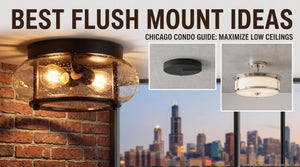
Flush mount fixtures are lights that:
- attach directly to the ceiling – These fixtures are installed snugly against the ceiling surface, making them ideal for spaces with limited height.
- have little to no gap between the fixture and ceiling – Their compact design helps maintain a clean, unobtrusive look without hanging down.
- typically feature a decorative cover or shade – The cover diffuses light while also adding a subtle design element to the room.
They sit “flush” against the surface—hence the name.
Common styles:
- dome lights – Rounded covers that evenly spread light and are often used in basic or functional spaces.
- drum shades – Cylindrical designs that offer a more modern and stylish appearance.
- modern flat-panel fixtures – Sleek, low-profile options that fit well in contemporary interiors.
- decorative flush mounts – Designed with added details or accents to enhance visual appeal while staying compact.
What Is Recessed Lighting?
Recessed lighting (also called can lights or downlights) is installed:
- inside the ceiling – The fixture is built into the ceiling itself, creating a seamless and integrated look.
- so the fixture is hidden – Most of the hardware is concealed, keeping the design clean and unobtrusive.
- with only the light opening visible – What you see is just the trim and light, giving a subtle, modern appearance.
The Core Difference: Presence vs Minimalism
- Flush mount = visible fixture + decorative element – Flush mounts are meant to be seen, adding style and character while providing light.
- Recessed lighting = hidden fixture + clean ceiling – Recessed lights prioritize simplicity, blending into the ceiling for a minimal aesthetic.
Flush Mount Lighting (Visual Effect)
Flush mounts:
- add personality – Their designs contribute to the overall look and feel of a room.
- act as a design feature – They serve as both lighting and décor, enhancing visual interest.
- create a focal point (even in small spaces) – Even compact fixtures can draw the eye and define the space.
They’re great if you want your lighting to:
- enhance the room’s style
- complement furniture and finishes
- feel intentional
But in low ceilings, they still “occupy” visual space.
Even though they don’t hang down, they can:
- draw attention to the ceiling
- make the ceiling feel slightly lower
Flush mounts are no longer just functional—they can also serve as key design elements. As noted by Rowabi, modern flush mounts have evolved into sophisticated fixtures that add personality and act as focal points, enhancing the overall style of a room.
Recessed Lighting (Visual Effect)
Recessed lights:
- create a clean, open look – With no visible fixture, the ceiling appears uncluttered.
- visually “lift” the ceiling – The absence of hanging elements makes ceilings feel higher.
- make rooms feel larger – Minimal design expands visual space.
Because the fixture is hidden, your eye isn’t interrupted.
This is especially powerful in:
- small rooms
- narrow hallways
- low-ceiling apartments
Recessed lights create a clean, open look that visually lifts the ceiling and makes rooms feel larger. As found in Home Décor Bliss, these fixtures emphasize vertical space and provide even lighting without interrupting the eye, making them ideal for compact areas.
Brightness and Light Distribution
Flush Mount Lighting
- uses one central light source
- distributes light outward
- creates even ambient lighting
Good for:
- small rooms
- bedrooms
- entryways
But:
- may create shadows in corners
- offers less flexible coverage
Recessed Lighting
- installed in multiples
- provides layered, even lighting
- can be spaced strategically
You can:
- eliminate dark corners
- highlight specific areas
- control brightness more precisely
Ceiling Height Perception
This is the biggest factor in your decision.
Flush Mount and Ceiling Height
- sit below the ceiling line
- visually “define” the ceiling
- can make ceilings feel slightly lower
In very tight spaces, this matters.
Recessed Lighting and Ceiling Height
- sit inside the ceiling
- create uninterrupted visual flow
- make ceilings feel higher
This is why designers often recommend recessed lighting for:
- small condos
- apartments
- basements


Style and Design Flexibility
Flush Mount Lighting
- modern – Clean lines and simple forms make them suitable for contemporary interiors.
- traditional – Classic shapes and finishes complement more timeless or elegant spaces.
- farmhouse – Rustic textures and warm tones fit cozy, country-inspired designs.
- industrial – Metal finishes and exposed elements add an edgy, urban feel.
- minimalist – Simple, understated designs work well in clean and uncluttered spaces.
- decorative styles – Some fixtures include intricate details to serve as subtle statement pieces.
They can:
- match your décor
- act as a design statement
- elevate simple rooms
Recessed Lighting
- minimal – Designed to stay out of sight, keeping the ceiling clean and simple.
- subtle – Provides light without drawing attention to the fixture itself.
- nearly invisible – Blends into the ceiling, allowing other design elements to stand out.
They don’t define style—they support it.
Installation Complexity
Flush Mount
- simple installation
- replaces existing ceiling light
- no ceiling cutting required
- lower labor cost
Recessed Lighting
- requires ceiling cutting
- may involve wiring adjustments
- often needs professional installation
- higher upfront labor cost
Cost Comparison
Flush Mount Fixtures
- generally affordable
- wide price range
- easy to install
Recessed Lighting
- higher installation cost
- requires multiple fixtures
- long-term value through performance
Maintenance
Flush Mount
- easy to clean
- accessible bulb replacement
Recessed Lighting
- harder to access
- longer-lasting LED options
- less frequent maintenance
As we covered in our last post, flush mount lighting is easy to clean and allows straightforward bulb replacement because most ceiling fixtures are accessible. Recessed lighting, however, is installed inside the ceiling, which can make access more involved. As highlighted by The Spruce, this design requires more effort for maintenance, though recessed LEDs tend to last longer and need less frequent attention.
Best Use Cases by Room
Choosing the right lighting isn’t one-size-fits-all—it depends on how each space is used and the kind of atmosphere you want to create. Here’s how to make the smartest choice for every area of your home:
Living Room
- Best choice: Recessed + accent lighting – This combination creates a layered, flexible setup that allows you to adjust the mood depending on the time of day or activity.
- Flush mount can work if decorative – A well-designed fixture can act as both a light source and subtle focal point.
Bedroom
- Best choice: – As we covered in our last post, flush mount (softer, cozy) bedrooms benefit from a more relaxed atmosphere, and flush mounts provide gentle, diffused light.
- Recessed works if layered with lamps – Alone it can feel too bright, but works well when combined with softer lighting.
Kitchen
- Best choice: – As highlighted in our recent article, recessed lighting in kitchens require clear, even lighting for safety and efficiency.
- Add pendants for style – Adds personality and visual interest.
Hallways
- Best choice: Recessed
- keeps space open and uncluttered
Bathroom
- Best choice: Recessed + vanity lighting
- Flush mount as backup
Entryway
- Best choice: Flush mount (adds character)
Can You Combine Both?
Yes—and in many cases, this is the best solution.
Example:
- recessed lights for general illumination
- flush mount for decorative focal point
This gives you:
- function
- style
- balance
Common Mistakes to Avoid
1. Using Only One Central Flush Mount
This can leave corners dark. Relying on a single light source often creates uneven illumination across the room. Adding layered lighting helps distribute light more effectively and improves overall ambiance.
2. Overusing Recessed Lights
Too many can feel harsh and overly bright. Excessive lighting can remove depth and make the space feel flat or clinical. It’s important to balance brightness with comfort by spacing them properly and using dimmers.
3. Ignoring Spacing
Poor recessed spacing leads to uneven lighting. Lights placed too far apart can create shadows, while placing them too close can cause glare. Proper planning ensures consistent and comfortable illumination throughout the space.
4. Choosing Oversized Fixtures
Even flush mounts should be proportional. A fixture that’s too large can overwhelm the room and draw too much attention to the ceiling. Keeping scale in mind helps maintain visual balance and harmony.
5. Forgetting Dimmers
Both options benefit from dimming control. Dimmers allow you to adjust brightness based on time of day or mood, adding flexibility and enhancing both functionality and atmosphere.
Which Looks Better in Low Ceilings?
Let’s answer the main question clearly.
If your priority is:
- making the room feel bigger
- creating a clean, modern look
- maximizing ceiling height
👉 Recessed lighting looks better
If your priority is:
- adding style and personality
- creating a focal point
- enhancing décor
👉 Flush mount lighting looks better
The Real Answer: It Depends on the Room
There’s no one-size-fits-all answer.
The best-designed homes use both:
- recessed lighting for function
- flush mounts for character
Quick Decision Guide
Choose Recessed Lighting if you:
- have very low ceilings
- want a modern, clean look
- need even lighting
- want to make the space feel bigger
Choose Flush Mount Lighting if you:
- want a decorative element
- need a budget-friendly option
- prefer simple installation
- want to match your design style
Best Overall for Low Ceilings
Recessed lighting
- visually raises ceilings
- creates cleaner lines
- improves light distribution
Best for Style and Personality
Flush mount lighting
- adds design impact
- enhances décor
- creates a focal point
Final Thought
Low ceilings don’t limit your design—they just require smarter choices.
The right lighting can:
- make your space feel larger
- improve functionality
- elevate your home’s style
So don’t just ask:
“What fits?”
Ask:
“What makes my space feel better?”
Because the right lighting doesn’t just sit on your ceiling—it transforms your entire room.
FAQs: Flush Mount vs Recessed Lighting — Which Looks Better in Low Ceilings?
1) Is recessed lighting better than flush mount for low ceilings?
Yes, in most cases. Recessed lighting creates a cleaner, more open look because the fixtures are built into the ceiling, helping the space feel taller and less crowded.
2) Can flush mount lights work in low ceiling modern homes?
Absolutely. Modern flush mount lighting can still look stylish if you choose slim, well-proportioned designs.
3) Which lighting option provides better brightness in small rooms?
Recessed lighting typically provides more even and customizable brightness since multiple fixtures can be spaced strategically.
4) Is recessed lighting more expensive to install than flush mount fixtures?
Yes. Recessed lighting usually has higher upfront labor costs due to ceiling cutting and wiring, while flush mounts are quicker and more budget-friendly to install.
5) Can you combine recessed and flush mount lighting in the same room?
Yes, and it’s often recommended. Combining both allows you to balance functionality with style, creating a layered and well-designed lighting setup.
Ready to Upgrade Your Lighting?
Looking to upgrade your lighting without sacrificing style or budget?
Urban Ambiance offers luxury yet affordable lighting fixtures that perfectly complement both flush mount and recessed lighting designs.
✨ Elevate your space with Urban Ambiance lighting—where high-end design meets everyday practicality.
Engagement Question
If your home has low ceilings, which would you choose—clean recessed lighting or a stylish flush mount fixture?
If this guide helped you decide, pass it along to a friend planning a home upgrade—they might be facing the same lighting dilemma.