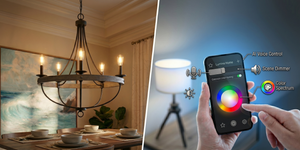
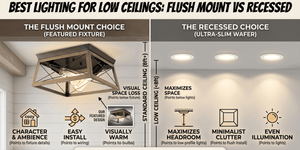
Smart Lighting vs Standard Fixtures — Is the Upgrade Really Worth It?
Lighting has come a long way from simple on/off switches. What used to be a purely functional part of the home has evolved into something far more dynamic—something that can adapt to your routine, respond to your needs, and even enhance your day-to-day lifestyle.
In 2026, homeowners are no longer just choosing fixtures based on style—they’re choosing based on function, automation, energy efficiency, and how well their lighting integrates with the rest of their home. It’s no longer just about how a fixture looks when it’s turned off, but what it can do when it’s on.
As reported previously, smart lighting introduces a level of convenience that standard fixtures simply can’t match. Imagine being able to control all your lights from your phone, set schedules that match your daily routine, or adjust brightness and color depending on the time of day—all without touching a switch. It’s not just a luxury anymore; for many, it’s becoming a practical upgrade that simplifies everyday living.
At the same time, standard fixtures still have their place. They’re reliable, straightforward, and often more affordable upfront. For homeowners who prefer simplicity or don’t need advanced features, traditional lighting can still meet basic needs effectively.
So the real question isn’t just whether smart lighting is “better”—it’s whether it aligns with how you live. If you value convenience, control, and a more connected home experience, the upgrade can be well worth it. But if your needs are simple, standard fixtures may still do the job just fine.
That’s where the big question comes in:
Smart Lighting vs Standard Fixtures — Is the Upgrade Really Worth It?
At first glance, smart lighting can feel like a luxury upgrade—something designed more for convenience or aesthetics than real necessity. Features like app-controlled lights, voice commands, and color-changing bulbs might seem excessive, especially if you’re used to the simplicity of a traditional switch.
But when you look deeper, smart lighting goes beyond “cool features” and starts to play a practical role in how your home functions every day. It’s less about novelty—and more about how it quietly improves efficiency, comfort, and control over time.
Smart lighting can impact:
- Your daily routine – You can automate your lights to turn on when you wake up, dim in the evening, or switch off when you leave the house. This removes small daily tasks and creates a smoother, more effortless routine without you even thinking about it.
- Your energy usage – Smart systems allow you to schedule lighting, turn off forgotten lights remotely, and even track usage in some cases. Over time, this helps reduce unnecessary energy consumption and lowers your electricity bills.
- Your home’s security – With features like scheduled lighting or remote control, your home can appear occupied even when you’re away. This added layer of security can help deter potential intruders and give you peace of mind.
- Your comfort and convenience – Adjusting brightness, switching scenes, or controlling multiple lights at once becomes incredibly easy. Whether you’re relaxing, working, or entertaining, you can instantly match the lighting to your needs.
- And even your home value – As smart home features become more common, having integrated lighting systems can make your property more appealing to future buyers who are looking for modern, tech-ready homes.
So let’s break this down honestly—without hype—so you can decide if smart lighting is truly worth the upgrade for your home.


What Is Smart Lighting?
As discussed in our previous coverage, smart lighting refers to modern lighting systems that go beyond the traditional on/off switch. Instead of manually controlling every light, smart lighting gives you the ability to manage your home’s lighting remotely, automatically, and with much greater flexibility—adapting to your lifestyle rather than the other way around.
At its core, smart lighting is designed to make your home more efficient, convenient, and responsive. Whether you’re at home or away, you can control how your space is lit with just a few taps or simple voice commands, making everyday living smoother and more intuitive.
Smart lighting systems can be:
- Controlled via smartphone apps – You can turn lights on or off, adjust brightness, or change settings from anywhere, giving you full control even when you’re not at home.
- Automated with schedules – Lights can be programmed to follow your daily routine, such as turning on in the morning, dimming in the evening, or switching off when you leave the house.
- Integrated with voice assistants (Alexa, Google Home, etc.) – With voice control, you can manage your lighting hands-free, which adds both convenience and accessibility.
- Adjusted for brightness and color – Many smart lights allow you to customize intensity and color temperature, or even switch between different colors to match your mood or activity.
- Synced with other smart home devices – Smart lighting can work alongside security systems, sensors, or entertainment setups, creating a more connected and automated home environment.
This includes:
- Smart bulbs – Easy to install and ideal for beginners, these bulbs connect directly to apps or hubs and offer features like dimming and color control.
- Smart switches – These replace traditional wall switches and allow you to control multiple lights or fixtures while adding smart functionality to existing setups.
- Smart dimmers – Designed for adjustable brightness, these provide smoother lighting control and can help set the perfect ambiance for any moment.
- Fully integrated smart lighting systems – These are more advanced setups that connect your entire home’s lighting into one seamless system, often customized for maximum automation, efficiency, and design flexibility.
In simple terms, smart lighting transforms your home from something you manually control into something that works with you—making lighting not just functional, but intelligent.
Many of these smart options take advantage of LED technology to offer not just energy efficiency but also advanced control features. According to Energy Star, some LED bulbs are connected, allowing you to control them using a smartphone app or voice assistant, making it easy to adjust lighting without physical switches.
What Are Standard Lighting Fixtures?
Standard lighting fixtures are:
- traditional light setups
- controlled by wall switches
- fixed in brightness and color
- manually operated
They include:
- ceiling lights
- chandeliers
- pendant lights
- recessed lighting
- wall sconces
No connectivity. No automation. Just simple functionality.
The Core Difference: Control vs Simplicity
If you simplify everything:
- Smart lighting = control, customization, automation
- Standard lighting = simplicity, reliability, affordability
Neither is “better” universally—it depends on how you live.
Smart Lighting Advantages
1) Control from Anywhere
One of the biggest advantages of smart lighting is the ability to stay in control no matter where you are. Whether you’re at work, on vacation, or just in another room, your lighting is always accessible.
With smart lighting, you can:
- Turn lights on/off remotely
- Check if you left lights on
- Control multiple rooms at once
Perfect for:
- Travel
- Busy households
- Peace of mind
2) Voice Control
“Turn off the lights.”
That’s it—no need to get up, reach for a switch, or even grab your phone.
Smart lighting integrates with:
- Alexa
- Google Assistant
- Siri
3) Automation and Scheduling
This is where smart lighting truly stands out—automation removes the need to think about lighting at all.
Set your lights to:
- Turn on at sunset
- Turn off at midnight
- Dim gradually in the evening
- Brighten in the morning
Standard Lighting Reality
Traditional lighting still works—but it relies entirely on manual effort.
- Manual operation
- Physical switches
- No automation
Energy Efficiency: Do Smart Lights Save Money?
Smart lighting reduces energy waste by improving how lights are used, not just what type of bulb you install.
- Automatically turning off lights
- Dimming when full brightness isn’t needed
- Scheduling usage efficiently
Combined with LED technology, this creates a highly efficient system that minimizes unnecessary energy use without sacrificing comfort.
Standard Lighting Limitations
- Lights are often left on accidentally
- No automatic shutoff
- No optimization
Real-World Impact
If you frequently:
- Forget lights
- Leave rooms lit unnecessarily
- Use lights longer than needed
Smart lighting can noticeably lower your electricity bill over time—while also making your home more convenient and easier to manage.
Cost: Upfront vs Long-Term Value
You might notice that smart bulbs often cost several times more than standard LEDs. As highlighted by Home Yarr, this higher price reflects not just the bulb itself but also the technology ecosystem it integrates with.
Standard Fixtures
- Lower upfront cost
- No extra setup
- No apps or hubs
Smart Lighting
- Higher initial investment
- Requires setup (apps, Wi-Fi, etc.)
- Some systems need hubs
The real question:
You’re not just paying for light—you’re paying for:
- convenience
- automation
- control
- efficiency
Installation: Easy vs Advanced
Standard Lighting
- straightforward installation
- works with existing wiring
- no learning curve
Smart Lighting
Depends on the type:
Smart Bulbs
- easiest upgrade
- screw in like regular bulbs
- connect via app
Smart Switches
- require wiring knowledge
- may need professional installation
Smart Systems
- full integration
- higher complexity
Flexibility and Customization
Smart Lighting Wins Big Here
With smart lighting, you can:
- adjust brightness instantly
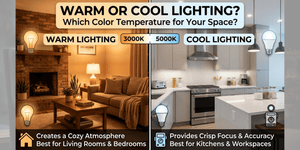
- change color temperature
- switch between warm and cool tones
- create scenes (movie mode, dinner mode, etc.)
Example:
- Movie night → dim warm lighting
- Work mode → bright cool lighting
- Evening → soft ambient glow
Standard Lighting Limitations
- fixed brightness (unless dimmer installed)
- fixed color temperature
- no scene control
Security Benefits
This is one of the most underrated advantages.
Smart Lighting for Security
You can:
- schedule lights when you’re away
- simulate occupancy
- control lights remotely
This makes your home look occupied—even when it’s not.
Standard Lighting
- no automation
- lights stay off unless manually turned on
Design and Aesthetics
Standard Fixtures
Still dominate in:
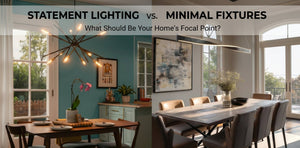
- classic design
- decorative lighting
- high-end fixtures
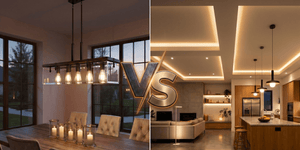
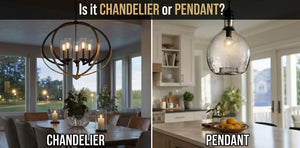
Chandeliers, pendants, and sconces are often standard fixtures.
Smart Lighting
Often:
- hidden (bulbs, strips, recessed lights)
- integrated into modern designs
But here’s the key:
You don’t have to choose one or the other.
You can combine:
- beautiful standard fixtures
- with smart bulbs or switches
Reliability: Old vs New
Standard Lighting
- extremely reliable
- no connectivity issues
- works during internet outages
Smart Lighting
- depends on Wi-Fi
- may have app glitches
- requires occasional updates
When it comes to reliability, traditional lighting remains unmatched. As found in the U.S. Department of Energy, lighting controls automatically turn lights off or reduce light levels, which shows that standard lighting does not require complex systems to function reliably. These fixtures are extremely dependable, work during internet outages, and have no connectivity issues.
On the other hand, smart lighting introduces additional layers of technology. As noted by the U.S. Department of Energy, connected home technologies can automatically turn lights on and off, highlighting that automation depends on apps, Wi-Fi, and occasional updates. While this adds complexity, most modern smart systems in 2026 are designed to be highly stable and user-friendly, offering convenience without sacrificing overall performance.
Who Should Choose Smart Lighting?
Smart lighting is worth it if you:
- value convenience
- want automation
- use smart home devices
- want energy optimization
- travel often
- like customization
- enjoy tech-driven homes
Who Should Stick with Standard Fixtures?
Standard lighting may be better if you:
- prefer simplicity
- don’t want apps or setup
- are on a tight budget
- want minimal maintenance
- don’t care about automation
Hybrid Approach: The Best of Both Worlds
As previously mentioned, most modern homes don’t fully commit to one.
Instead, they use:
- standard fixtures (for design)
- smart controls (for function)
Example:
- chandelier with smart bulbs
- pendant lights with smart switches
- recessed lights with automation
This gives you:
- beauty
- control
- flexibility
Real-Life Scenarios
Scenario 1: Busy Family Home
Smart lighting:
- automates routines – Lights can turn on/off based on schedules, reducing daily tasks for busy households.
- reduces forgotten lights – Automation helps prevent lights from being left on, saving energy and effort.
- adds convenience – Voice control or app access makes managing lighting quick and easy.
Worth it: Yes
Scenario 2: Minimalist Apartment
Standard lighting:
- simple – Traditional setups are straightforward with no learning curve.
- low cost – No need for additional devices or smart systems, making it budget-friendly.
- easy – Maintenance and usage are hassle-free with basic switches.
Worth it: Not necessary
Scenario 3: Tech-Driven Smart Home
Smart lighting:
- integrates fully – Works seamlessly with other smart devices for a connected home experience.
- enhances lifestyle – Adds comfort, customization, and efficiency to everyday living.
Worth it: Absolutely
Common Mistakes to Avoid
1) Going Fully Smart Too Fast
Jumping into a full smart home setup all at once can be overwhelming and expensive. It’s better to start with key areas like the living room, bedroom, and kitchen so you can learn what works best for your lifestyle before expanding.
2) Ignoring Compatibility
Not all smart devices work seamlessly together, which can lead to frustration and limited functionality. Always check if your devices are compatible with your chosen system (like Alexa or Google) to ensure smooth integration.
3) Buying Cheap Smart Bulbs
Low-cost smart bulbs may seem like a good deal, but they often come with reliability issues. Problems like frequent disconnections, flickering, or early failure can end up costing more in the long run.
4) Overcomplicating the System
Adding too many features or devices can make your smart home difficult to manage. Keeping your setup simple and scalable ensures it remains user-friendly and easy to upgrade over time.
So… Is Smart Lighting Worth It?
YES — if you value:
- convenience
- automation
- energy savings
- modern living
NO — if you prefer:
- simplicity
- lower upfront cost
- no tech involvement
SO…
Smart lighting is no longer just a luxury—it’s becoming a standard in modern homes.
While it costs more upfront, it offers:
- better control
- improved efficiency
- enhanced lifestyle
- added security
But the best solution isn’t always all-in.
The smartest choice?
Combine smart functionality with beautiful standard fixtures.
That way, you get:
- the design you love
- and the control you didn’t know you needed
Therefore…
Lighting is no longer just about turning a switch on and off.
It’s about how your home responds to you.
And in 2026, smart lighting isn’t just about technology—it’s about making your home work smarter, feel better, and adapt to your life.
FAQs: Smart Lighting vs Standard Fixtures — Is the Upgrade Really Worth It?
1) Is smart lighting worth the cost compared to standard fixtures in 2026 homes?
Yes, for many homeowners, smart lighting vs standard fixtures cost comparison in 2026 shows that while smart lighting has a higher upfront cost, it offers long-term savings through energy efficiency, automation, and reduced electricity waste.
2) Can I convert my existing lighting to smart lighting without replacing fixtures?
Absolutely. One of the easiest upgrades is using smart bulbs for existing standard light fixtures, which allows you to keep your current design while adding app control, dimming, and automation features.
3) Does smart lighting really help reduce electricity bills?
Yes. Smart lighting energy savings for modern homes come from features like automatic shut-off, scheduling, and dimming, which prevent unnecessary energy usage and can lower monthly utility costs over time.
4) What are the disadvantages of smart lighting compared to standard lighting?
The main drawbacks include higher upfront cost, reliance on Wi-Fi or apps, and occasional setup complexity. However, most modern systems are stable and user-friendly once installed.
5) Which is better for home resale value: smart lighting or standard fixtures?
A combination works best. Smart lighting can make a home feel modern and energy-efficient, while stylish standard fixtures (like chandeliers or pendants) maintain strong visual appeal for buyers.
Ready to Upgrade Your Lighting?
Looking to upgrade your lighting without sacrificing style?
Urban Ambiance offers luxury yet affordable lighting fixtures that pair beautifully with both smart and standard setups.
✨ Elevate your home with Urban Ambiance lighting—premium design, practical pricing, and perfect for modern living.
Are you more into smart lighting convenience or do you prefer the simplicity of traditional fixtures?
If this guide helped you decide, share it with a friend who’s upgrading their home—they might be debating the same thing right now.